| Common
Ground Negotiation Services 604 Grove Avenue Charlottesville, VA 22903 (434) 244-0714 |
| Common
Ground Negotiation Services 604 Grove Avenue Charlottesville, VA 22903 (434) 244-0714 |
|
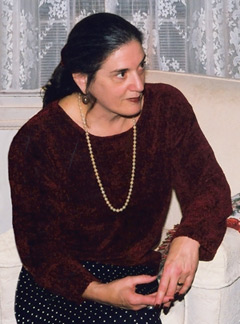
| SUSAN OBERMAN Mediators are bound by professional ethics and law to maintain impartiality and balance of power among the parties in all instances. Neutrality (about the outcome) and impartiality (among parties), while difficult to define and achieve, are not the only forms of bias. Mediators know well the illusory nature of objectivity. It is incumbent upon all mediators to inform parties of the biases and beliefs they bring to their work, and the model they are using, since it inevitably impacts on parties’ decision making. Educated consumers should be informed about the mediator’s point of view and decide which model is the one they want to use. The Sustainable Knowledge Model of Norm-Educating Mediation establishes a structure for mediator and parties to recognize the places where the mediator’s point of view and model influence parties’ decision making. Susan Oberman is a certified mediator working with family and group conflicts, since 1987. Ms. Oberman developed the Sustainable Knowledge Model of Norm-Educating Mediation which is based on the premise that people with all relevant information make better decisions. Ms. Oberman brings highly developed listening skills and an ability to create a safe environment for decision making to her work with intact families, community groups, and in separation and divorce. As a Certified Family Mediator in the Virginia J&DR and Circuit Courts, Ms. Oberman can assist parties in deciding on child and spousal support, custody and parenting arrangements and equitable distribution. Working with couples, families, and groups for 20 years has given Ms. Oberman a depth of experience in helping parties learn to attack the problem, not each other. Ms. Oberman was certified in the State of New York in 1987 and by the Supreme Court of Virginia in 1995. She founded Common Ground Negotiation Services as a solo private mediation practice in 1999. Common Ground Negotiation Services (CGNS) has held contracts with the Supreme Court of Virginia to provide mediation in the Juvenile and Domestic Relations and Circuit Courts, and has been listed in Charlottesville, Albemarle and the surrounding counties as a mediation provider since 2000, under SB 127. In June, 2001 CGNS received a grant from the Supreme Court of Virginia to create the Adult Incapacity Mediation Pilot Project. CGNS offers a series of workshops which include: “Using Dialogue For Decision Making,” “Negotiation Skills for Everyday Life,” “Custody Mediation: King Solomon’s Nightmare,” “Mediation Models: A Professional Conundrum,” and “Recognizing and Overcoming Sex and Gender Bias in Mediation.” As an activist in movements for social change since the mid-1960’s and a founder of a women’s center on Long Island in 1972, Ms. Oberman believes building community is an integral part of her work in mediation and group facilitation. Since moving to Charlottesville in 1988 she has worked consistently to bring diverse groups of people together. She has been a member of the Black Women/White Women/All Women Discussion Group since it began in 1990, and has organized numerous community discussions and conferences confronting race, gender, age, and peace and justice issues. As a founder and planner of the annual Days of Dialogue on Race Relations events held annually in Charlottesville from 1997 to 2002, and as a founding member of the Community Non-Violence Education Council (CNVEC) in 2000, she has continued to raise awareness locally on issues that impact community members as parents, children, and citizens. As a member of CNVEC she worked with Burnley-Moran Elementary School from 2000-2002. CNVEC assisted the Burnley-Moran Life Skills Committee in redesigning the program used to fulfill the character education mandate, developed workshops on dialogue and conflict which were presented to the teachers, and provided two workshops for the parents through the Burnley-Moran PTO. As a member of the Charlottesville Center for Peace and Justice (CCPJ) since 1999, Ms. Oberman continues to work on peace and justice issues that impact our community and our country. |